Why no roofer can waive your deductible in Texas
The 2019 law, what it changed, and how to handle the deductible on your claim the right way.
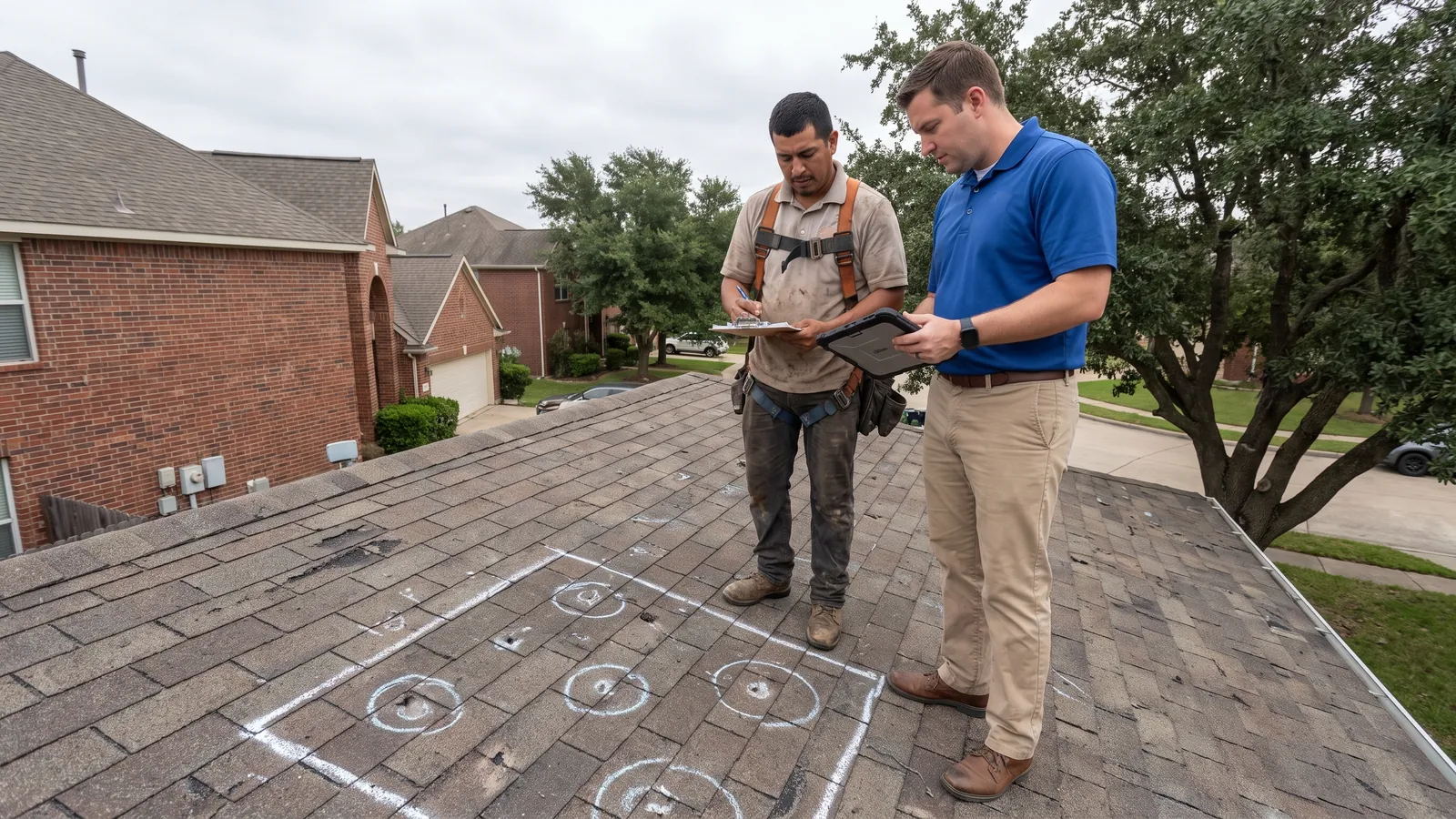
For years the standard storm-chaser pitch in Texas was 'we'll take care of your deductible.' The contractor inflated the invoice, the insurer paid the inflated amount, and the homeowner paid nothing out of pocket. In 2019 the Legislature ended that with HB 2102, now Texas Insurance Code chapter 707. Here's what it actually says and what it means for you.
What the law does
- Contractors can't waive, absorb, rebate or offset your deductible. Doing it, or advertising it, is a Class B misdemeanor — and if the contractor submits an inflated invoice to make it work, that's insurance fraud, a state-jail felony.
- Insurers can require proof you paid the deductible before they release the recoverable depreciation — the second, larger check. A cancelled check, a credit card receipt or a signed statement from the contractor that it was collected.
- Homeowners who knowingly go along with it can have the claim denied and, in theory, face the same fraud statute.
What it means on your claim
Your out-of-pocket on a covered roof claim is your deductible plus anything you choose to upgrade beyond the insurer's scope. On most Texas policies written since 2015 the wind-and-hail deductible is a percentage of the dwelling coverage — 1 percent is common, 2 percent increasingly so — so on a $400,000 house it's $4,000 to $8,000. You pay it to the contractor; it appears on the invoice as a line item; the contractor's final invoice to the insurer shows it collected.
How the money actually flows
- The adjuster writes a scope and a replacement cost value (RCV) — say $18,000.
- The insurer pays RCV minus depreciation minus your deductible up front: perhaps $18,000 − $6,000 − $4,000 = $8,000 (the actual cash value check).
- You pay the contractor your $4,000 deductible plus the $8,000.
- The roof is built. The contractor sends the completion certificate and final invoice.
- The insurer releases the $6,000 recoverable depreciation to you, and you pay the contractor the balance.
Red flags
'We'll handle your deductible.' 'Sign here and you won't pay anything.' 'We'll write the invoice for a little more.' 'Just tell the insurance company you paid it.' Each of those is a request that you help commit fraud, and each of them tells you the contractor's business model depends on it. Walk away.
What's allowed
Discounts that aren't tied to the deductible are fine — a contractor can give you a lower price, as long as the invoice to the insurer is the real price and the deductible is really paid. Financing the deductible is fine. Choosing a cheaper shingle than the scope allows and pocketing the difference is your business, though your insurer may only pay for what's installed.
Common questions
Can a roofer legally waive my deductible in Texas?
No. Since September 2019 (HB 2102, Insurance Code chapter 707) it is a criminal offense for a contractor to waive, rebate or absorb an insurance deductible, and insurers can withhold your depreciation payment until you prove you paid it.
What if I can't afford my deductible?
Financing. We offer third-party financing for the deductible and any upgrades, and many homeowners use a HELOC or a credit card for the deductible specifically. What you can't do is have the contractor 'eat' it.
Do I have to pay the deductible before the work starts?
Usually it's due with the first payment — the ACV check plus the deductible — before or at the start of the job. We never take a deposit before you've approved a written price.
Does this law apply to repairs too?
Yes, to any insurance claim on residential or commercial property. A small repair under a claim is subject to the same deductible rules — which is one reason small repairs are rarely worth claiming.
What if my old roofer waived my deductible years ago?
The law isn't retroactive to work before 2019, and the risk was mostly the contractor's. Going forward, don't do it — the insurer will ask for proof of payment.
Related: Insurance claims service · Hail damage: what to do · Roof replacement cost