How long does a roof last in Central Texas?
The honest numbers for shingle, metal and tile in a climate with 100-degree summers and spring hail — and what shortens or extends them.
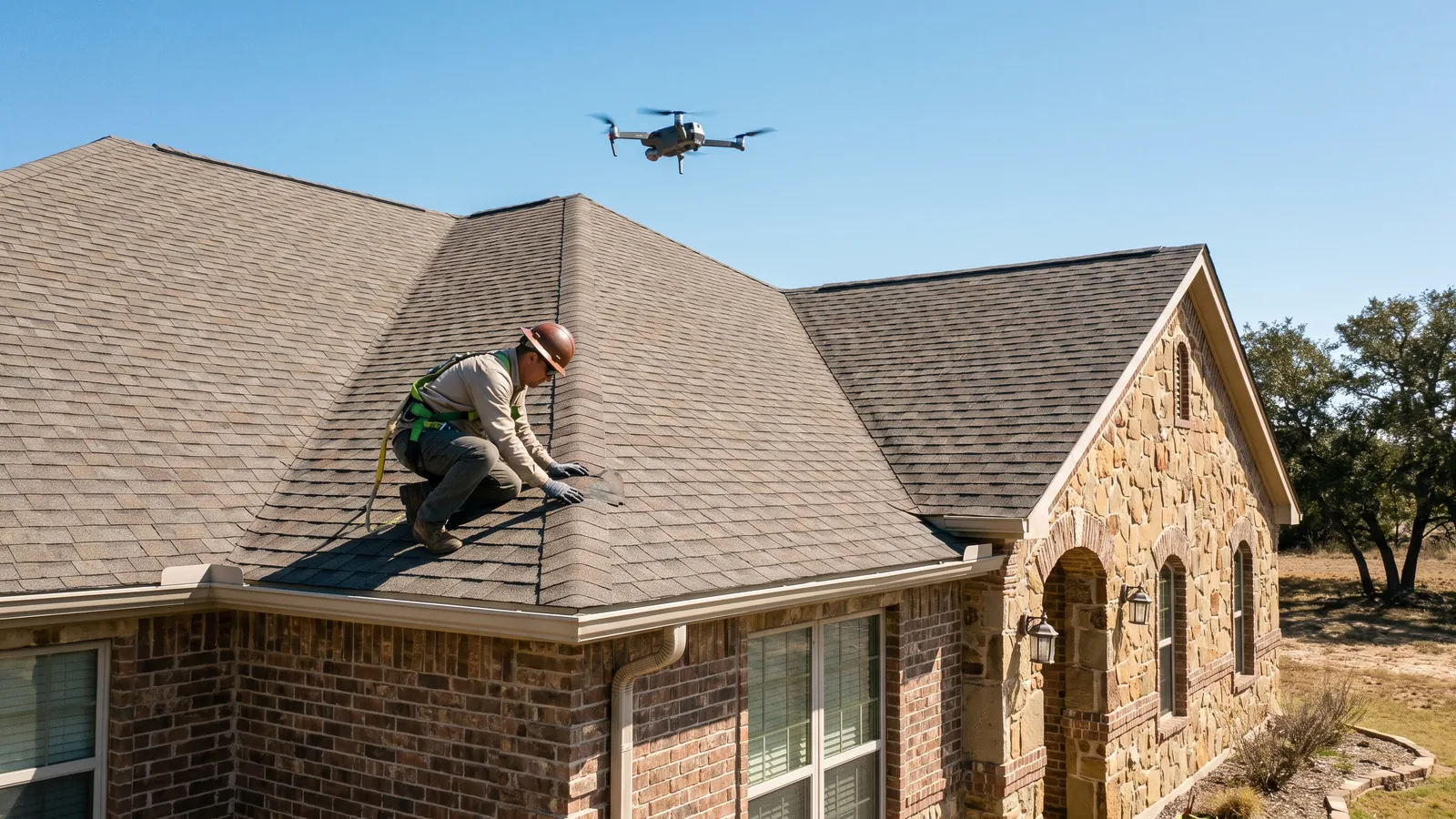
The number on the shingle wrapper is a warranty term, not a lifespan. A '30-year' architectural shingle in Central Texas lasts 18 to 25 years; a 'lifetime' shingle lasts about the same. Standing-seam metal lasts 40 to 60 years. Clay tile lasts a century, but the underlayment beneath it lasts 20 to 30. Here's why, and what changes the number for your house.
Typical lifespans in Comal County
| Roof type | Realistic life here | What usually ends it |
|---|---|---|
| 3-tab asphalt shingles | 12 – 18 years | Brittleness, wind, first hail |
| Architectural shingles (Class 3) | 18 – 25 years | Hail, granule loss, heat |
| Class 4 impact-resistant shingles | 22 – 30 years | Heat and UV; hail rarely |
| Standing-seam steel (Kynar) | 40 – 60 years | Finish fade, sealant at penetrations |
| Screw-down R-panel | 25 – 40 years | Fasteners backing out; re-screw at 15 |
| Clay / concrete tile | 50 – 100 years (tile) · 20 – 30 (underlayment) | Underlayment failure, hail fractures |
| TPO / flat commercial | 18 – 25 years | Seams, ponding, hail |
What shortens a roof's life here
Heat and UV
Asphalt dries out. A New Braunfels roof sees 100-plus days over 95 degrees and an attic that hits 140. That bakes the oils out of a shingle, which is why a roof that would go 30 years in Ohio goes 22 here.
Ventilation
The biggest controllable factor. A roof over a poorly vented attic ages from underneath; the manufacturers reduce the warranty for it. Ridge-and-soffit ventilation and a radiant barrier can add five years to a shingle roof.
Hail
The thing that actually ends most Comal County shingle roofs — not old age. One good storm on a Class 3 roof is a replacement. Class 4 or metal takes hail out of the equation for most storms.
Installation
Four nails instead of six, no starter strip, no ice-and-water in the valleys, plastic pipe boots, felt instead of synthetic underlayment — every shortcut takes years off. A builder-grade roof in Veramendi has all of them.
Trees
Live oaks over a roof mean moss, wet valleys and limbs. Trim them back six feet and clean the valleys every fall.
Signs your roof is near the end
Granules in the gutters and bald patches on the shingles. Curled or cupped shingle edges. Cracked or missing tabs after wind. Daylight in the attic. Multiple leaks in a year. A roof past 18 years in this climate should get an inspection every spring; ours is free after any storm and $150–$250 otherwise, with a written report you can use for planning or a sale.
How to make a roof last longer
Buy Class 4 or metal. Ventilate the attic. Keep trees off it. Replace the plastic pipe boots at year eight before they crack. Clean valleys and gutters every fall. Fix small leaks the week you find them. Get it inspected after every named hailstorm so a claim doesn't age out.
Common questions
How often should a roof be replaced in Texas?
Every 18 to 25 years for shingles, 40-plus for metal — or sooner when a hailstorm totals it, which in Comal County is the more common reason. Many roofs here are replaced on a claim at 8 to 12 years old.
Can a roof last 30 years in Texas?
A Class 4 shingle roof with good ventilation can reach 30 if hail spares it. Metal and tile easily exceed 30. A standard builder roof will not.
How do I know how old my roof is?
The seller's disclosure, the city permit history (New Braunfels keeps re-roof permits on file), or a roofer's inspection — granule loss, brittleness and the style of shingle date a roof within a few years.
Does homeowners insurance cover a roof that's just old?
No. Insurance covers sudden damage — hail, wind, a fallen tree — not wear. Some Texas carriers now pay only actual cash value on roofs over 15 years old even for hail; check your policy's roof schedule.
Is a 20-year-old roof a problem when selling?
Buyers' inspectors flag anything over 15 years, and some insurers won't write a new policy on a roof over 20 without an inspection. A pre-sale inspection report — or a new Class 4 roof — resolves it.
Related: Roof inspections · Ventilation & skylights · Roof replacement cost